
Marcite & Plaster Pool Resurfacing in Palm Bay, FL
Palm Bay Pool Resurfacing resurfaces worn marcite and plaster pools for homeowners in Palm Bay and southern Brevard County. This is the finish on most pools built during the area's 1980s and 1990s expansion, and it's the surface people are usually standing on when they call because the pool has gone rough, blotchy, or has started to chip. Resurfacing replaces the failing finish layer so the pool is smooth, holds chemistry, and looks like a pool again.
What plaster resurfacing involves
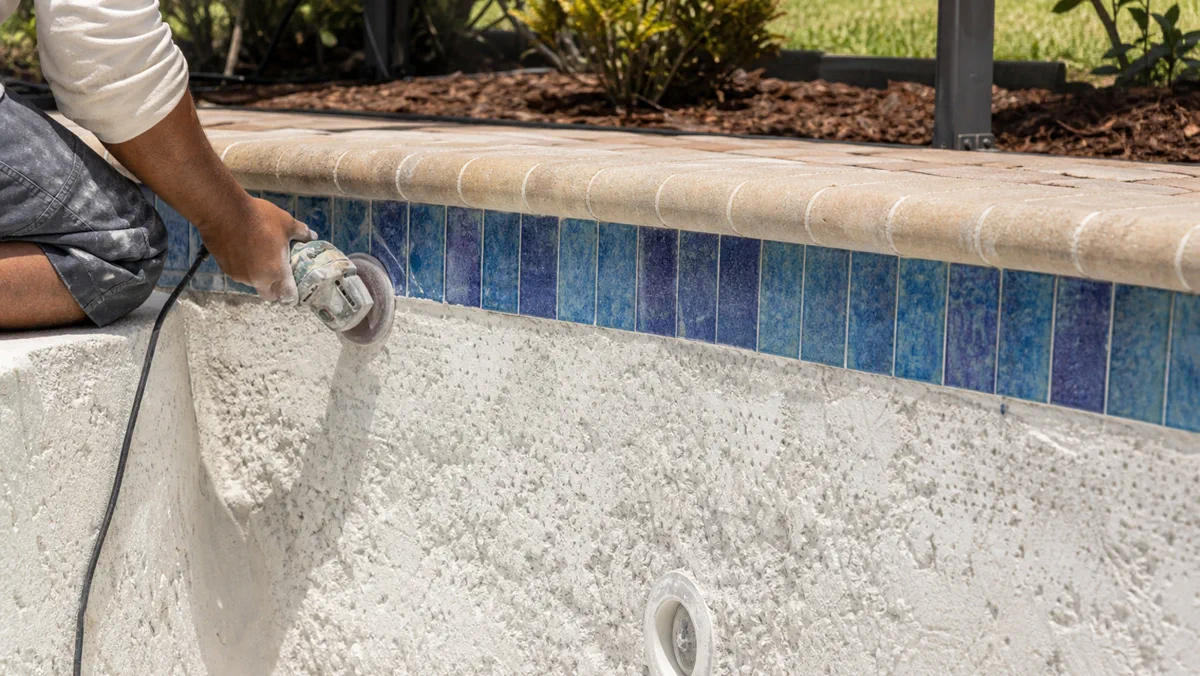
Plaster resurfacing is not a coat of paint. The pool is drained, the existing surface is prepped, and any hollow or delaminating areas are opened up so the new finish bonds to something sound. Depending on the condition of the old plaster, this is either a bond-coat application over a still-solid surface or a full chip-out down to the gunite shell. New plaster is then troweled on, cured, and the pool is refilled and balanced. The prep is where most of the judgment lives, which is why the scope is confirmed at the pool.
When you may need it
Plaster is usually telling you it's done when the floor and steps feel like sandpaper, when gray or brown mottling comes back after acid washing, when rust stains keep returning, or when you see chips and hollow-sounding spots. A pool that has only been resurfaced once since the home was built in the '80s or '90s is often overdue.
Why plaster wears out faster here
Palm Bay conditions are hard on plaster. Iron in well water used for irrigation stains the surface wherever overspray reaches the pool. Salt chlorine systems — a common retrofit in this area — are gentle on swimmers but tougher on aging plaster. And a year-round swim season with strong sun means the finish never gets a break.
What affects the cost
Surface area is the biggest driver, followed by how much prep the shell needs and how equipment reaches the pool through a screened lanai. A pool that only needs a bond coat prices differently than one that needs a full chip-out. Because these can't be judged from a photo or a phone call, the scope is confirmed on site. More on cost factors.
Request a Pool-Surface Callback
Describe the surface in plain language. You don't need to diagnose the issue before reaching out.
Questions Homeowners Ask
How long does a plaster resurface last?
In this climate, standard plaster commonly runs 10–15 years before it needs redoing, though salt systems and water chemistry can shorten that. Quartz and aggregate finishes generally last longer, which is why many homeowners upgrade when they resurface.
Can you just patch the rough spots instead?
Sometimes, for a localized area — but when the whole surface has gone rough or is mottling, patching doesn't hold up and rarely blends. Whether repair or full resurfacing makes sense is confirmed when the surface is seen.
Do I have to switch off plaster?
No. Standard white plaster is still a valid choice and the most affordable finish. Upgrading to quartz or aggregate is optional and gets discussed at the pool if you're interested.
Tell us what the surface is doing.
A plain-language description is enough to start. The scope is confirmed at the pool, once the surface, size, and access are seen in person.